
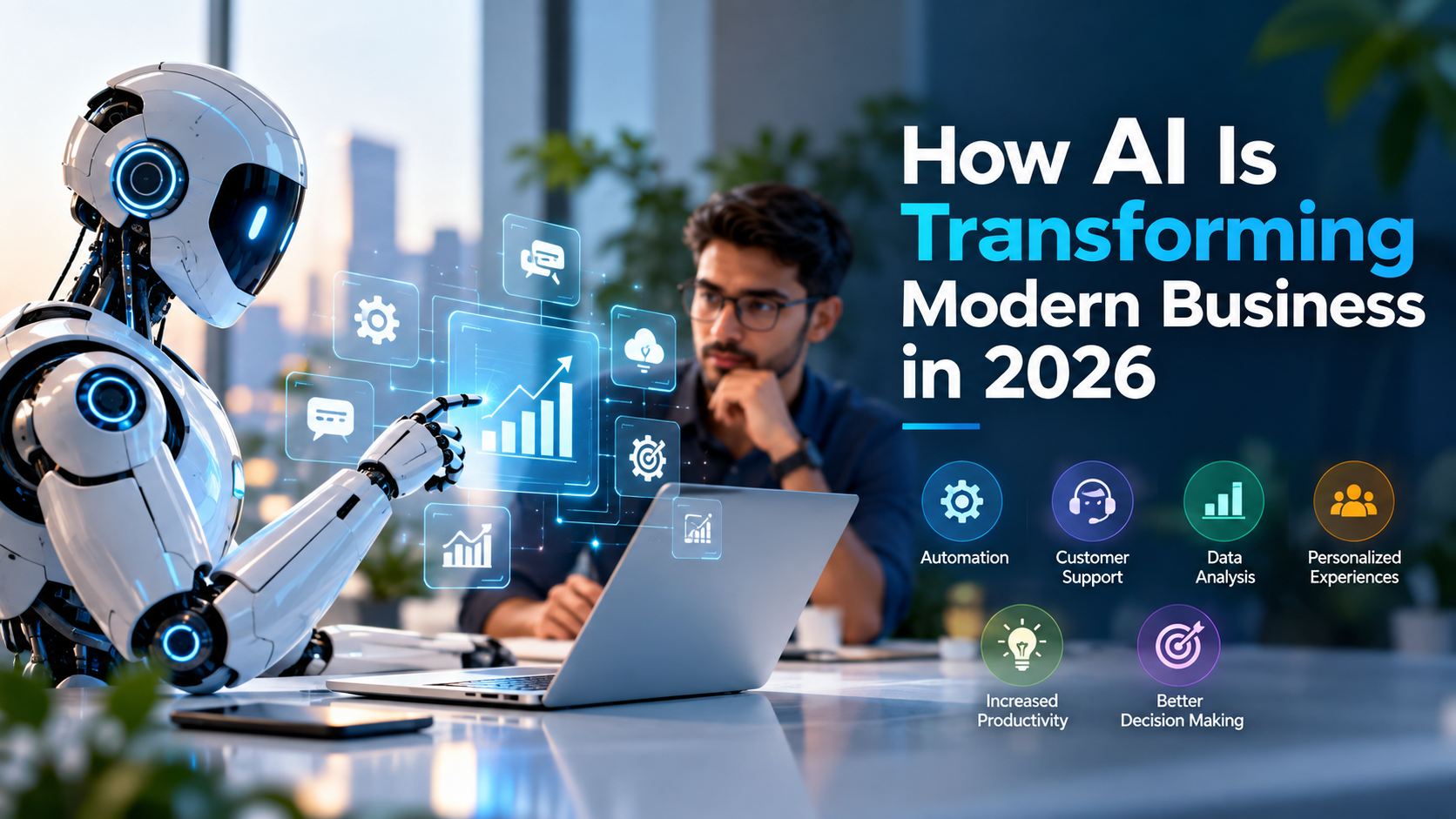
In 2026, businesses of all sizes are exploring AI solutions to improve productivity, optimize operations, and stay competitive in an increasingly digital world.
What Is Artificial Intelligence?
Artificial Intelligence refers to technologies that enable computers and software to perform tasks that traditionally require human intelligence. These tasks can include understanding language, analyzing data, recognizing images, generating content, and making predictions.
Modern AI applications include chatbots, recommendation systems, virtual assistants, AI-powered analytics, and automated business workflows.
How AI Is Helping Businesses
Automating Repetitive Tasks
AI can automate time-consuming tasks such as data entry, document processing, customer inquiries, scheduling, and report generation.
This allows employees to focus more on strategic and creative work instead of spending valuable time on repetitive activities.
Improving Customer Support
AI-powered chatbots can provide instant answers to common customer questions 24/7. Businesses can use AI assistants to handle frequently asked questions, collect customer information, and guide users toward the right products or services.
When combined with human support, AI can help businesses provide faster and more consistent customer service.
Data-Driven Decision Making
Businesses generate large amounts of data every day. AI can analyze this information and identify patterns, trends, and useful insights.
For example, companies can use AI to analyze customer behavior, sales data, website traffic, and operational performance to support better business decisions.
Personalized Customer Experiences
AI can analyze customer preferences and behavior to deliver more personalized experiences.
E-commerce platforms, for example, can recommend products based on previous purchases or browsing behavior. Similarly, content platforms can suggest articles, videos, or other content based on user interests.
Increasing Productivity
AI tools can assist employees with tasks such as writing, coding, research, data analysis, documentation, and communication.
Instead of replacing every human task, AI is increasingly being used as a productivity tool that helps employees complete their work faster and more efficiently.
AI in Software Development
AI is also changing the way software applications are designed and developed.
Developers can use AI-assisted tools for:
Code generation
Bug detection
Code documentation
Test generation
Database queries
API development
Code optimization
Technical documentation
However, human developers remain important for architecture, business logic, security, testing, and making technical decisions.
Why Businesses Should Consider AI
Implementing AI can provide several potential benefits:
Improved operational efficiency
Faster customer support
Reduced repetitive work
Better data analysis
Personalized customer experiences
Increased employee productivity
Faster business processes
The right AI strategy depends on the specific needs, data, budget, and goals of each business.
Challenges of Implementing AI
Although AI offers significant opportunities, businesses should also consider potential challenges.
Data Security
Businesses need to ensure that sensitive customer and company information is handled securely when using AI systems.
Accuracy
AI-generated information can sometimes be incorrect. Important business decisions should therefore include appropriate human review and validation.
Integration
AI solutions may need to integrate with existing websites, applications, CRMs, databases, and business systems. Proper technical planning is important for successful implementation.
Cost
Developing and maintaining AI solutions can involve infrastructure, development, API, and maintenance costs. Businesses should evaluate the expected value before investing.
What Is the Future of AI in Business?
AI is expected to become increasingly integrated into everyday business operations. Companies are likely to use AI not only as a standalone tool but as part of their existing software, workflows, and digital platforms.
Businesses that identify practical use cases and implement AI responsibly can use the technology to improve efficiency while continuing to rely on human expertise for important decisions.
Conclusion
Artificial Intelligence is transforming the way modern businesses operate. From customer service and automation to software development and data analysis, AI can help organizations improve productivity and create better digital experiences.
The key is not simply adopting AI because it is trending, but identifying real business problems where AI can provide measurable value.
For businesses planning to adopt AI, starting with a focused use case, establishing clear goals, and continuously evaluating the results can provide a practical path toward successful AI adoption.